
The air inside a commercial facility is the invisible engine driving the entire operation. It is easy to take for granted when it is working perfectly, but the moment the climate becomes unbalanced, the ripple effects are felt throughout the entire organization. When the indoor environment is meticulously regulated, employees operate at peak productivity, sensitive manufacturing inventory is protected from degradation, and retail customers remain comfortable enough to linger and engage. Conversely, a failing system quickly transforms a bustling office into an unworkable hotbox or a freezing, hostile environment that drives customers away and sends staff home.
Commercial climate control goes far beyond the simple mechanism of adjusting a wall-mounted thermostat. It involves complex, interwoven systems of heavy-duty ventilation, precise thermal regulation, fluid dynamics, and, in many industrial settings, immense pneumatic power. When these foundational systems fail, businesses do not just face temporary discomfort; they face immediate revenue loss, potentially hazardous working conditions, and skyrocketing energy penalties that drain operational budgets. Furthermore, the modern regulatory landscape demands stricter adherence to indoor air quality standards than ever before, making climate management a core pillar of facility compliance and risk mitigation.
This comprehensive guide is designed to serve as a definitive roadmap for facility managers, property owners, and business directors. We will navigate through the highly technical steps of engineering robust cooling infrastructure, optimizing winter heating operations, managing industrial air power, and implementing the strict maintenance protocols required to prevent catastrophic system failures. By shifting from a reactive approach to a proactive, highly strategic management style, you can transform your building’s climate systems from a massive liability into a highly efficient, value-generating asset.
Engineering a Highly Efficient Cooling Infrastructure
When the sweltering heat of mid-summer sets in, the cooling infrastructure of a commercial building is pushed to its absolute limits. Designing, upgrading, or maintaining this infrastructure requires precise mathematical calculations and a deep understanding of thermodynamics. A common and incredibly costly mistake made by property owners is assuming that bigger is always better. In reality, oversized cooling equipment is just as detrimental to a building’s health and energy efficiency as undersized equipment. Proper engineering ensures that the system works efficiently, removes excess moisture from the air, and maintains a stable environment without constant, damaging cycling.
Calculate True Thermal Load Requirements Before Replacing Equipment
The most critical step in engineering a commercial cooling system occurs long before any equipment is purchased or installed. You must understand the exact thermal load of the building, which dictates how much heat energy needs to be removed from the space every hour.
-
Perform a Manual N commercial load calculation: Do not simply look at the data plate on a twenty-year-old twenty-ton rooftop unit and order a modern equivalent. The thermal profile of your building has likely changed drastically. If you have recently upgraded to low-heat LED lighting, installed low-emissivity (Low-E) glass windows, or increased the R-value of your roof insulation, your building now retains significantly less heat.
-
Account for modern occupancy and equipment: Modern office spaces often have fewer people per square foot due to hybrid work schedules, but they may house significantly more heat-generating computer servers and smart displays. All of these variables must be calculated precisely.
-
Avoid the dangers of short-cycling: Partnering with a specialized HVAC contractor to perform this rigorous thermal audit prevents the catastrophic mistake of installing oversized units. An oversized unit cools the air too quickly and shuts off before it has the chance to run air across the evaporator coil long enough to remove humidity. This results in a cold but clammy environment that promotes aggressive mold growth and drastically shortens the lifespan of the compressor due to constant starting and stopping.
Implement Zoned Temperature Control for Multi-Use Spaces
A large commercial facility is never a uniform thermal environment. Treating an entire 50,000-square-foot building as a single zone is highly inefficient and guarantees that at least half of your occupants will be uncomfortable at any given time.
-
Utilize Variable Air Volume technology: Separate your facility into distinct thermal zones using Variable Air Volume (VAV) boxes and automated dampers within the ductwork. This allows the system to modulate the exact amount of chilled air delivered to specific areas based on real-time demand.
-
Address solar heat gain dynamically: A conference room facing the eastern sun will require massive cooling loads at nine in the morning, while the western-facing executive suites will be relatively cool. Zoned systems automatically adjust to this shifting solar heat gain throughout the day without freezing out the rest of the building.
-
Isolate critical infrastructure: Certain areas of a commercial building, such as server rooms, data centers, or specialized manufacturing cleanrooms, require precise, uninterrupted cooling 24 hours a day, 365 days a year, regardless of the outdoor temperature. Integrating independent local air conditioning systems dedicated exclusively to these critical IT or manufacturing zones provides essential redundancy. If the main rooftop unit temporarily goes offline or is shut down for weekend maintenance, your millions of dollars of sensitive technological equipment remain perfectly protected by these isolated systems.
Optimizing Winter Operations and Heating Reliability
While summer cooling often gets the most attention, optimizing a commercial building for extreme winter weather is arguably more critical for the structural integrity of the facility and the safety of its occupants. In severe climates, a total loss of heat does not just mean employees wear heavier coats; it means water pipes freeze and burst, fire suppression sprinkler systems fail, and the property sustains catastrophic water damage. Achieving reliable, efficient winter operations requires a holistic approach that looks at both the mechanical generation of heat and the physical boundaries that contain it.
Audit Thermal Boundaries Before Upgrading Heat Output
Before authorizing the capital expenditure to install larger, more powerful boilers or rooftop gas heaters, you must first ensure that the building is actually capable of holding the heat you are paying to generate. Pumping massive amounts of thermal energy into a building with a compromised envelope is a massive waste of operational funds.
-
Seal large-scale air leaks: Conduct a comprehensive facility envelope audit prior to the winter season. Focus heavily on industrial loading docks, which are notorious for massive heat loss. Ensure that dock seals and heavy-duty weatherstripping are completely intact.
-
Install architectural vestibules: If your facility features high-traffic main entrances, the constant opening and closing of doors will strip the lobby of its heat instantly. Constructing a vestibule—a small enclosed area with two sets of doors—creates an airlock that prevents the icy outdoor air from rushing directly into the main workspace.
-
Insulate exposed infrastructure: Ensure that all ductwork running through unconditioned spaces, such as crawlspaces or drop ceilings near exterior walls, is wrapped in thick, commercial-grade foil-faced insulation to prevent the warm air from cooling before it ever reaches the registers. Proactive facility managers establish an ongoing contract for routine heating repair services well before the first freeze hits. This ensures that minor ignition issues, failing thermocouples, or worn-out blower motors are identified and resolved while the autumn weather is still mild, rather than waiting for a failure during a December freeze.
Schedule Preventative Combustion Analysis Annually
For commercial facilities that rely on natural gas or propane for heating, safety must be the absolute highest priority. The combustion process is volatile and requires precise calibration to remain safe and efficient. Over time, vibrations, thermal expansion, and accumulating soot can alter the way a commercial burner operates.
-
Mandate digital combustion testing: Demand that your maintenance technicians perform a comprehensive digital combustion analysis on all gas-fired equipment every single autumn. This test utilizes highly sensitive probes inserted into the exhaust flue to measure the exact ratios of oxygen, carbon dioxide, and carbon monoxide being produced.
-
Optimize the fuel-to-air mixture: If a burner is running “rich” (too much fuel, not enough oxygen), it wastes expensive natural gas and produces heavy soot that clogs the heat exchanger. A properly calibrated burner extracts the maximum amount of thermal energy from every therm of gas purchased.
-
Prevent deadly carbon monoxide exposure: The most critical reason for this testing is to ensure that the heat exchanger—the metal barrier that separates the toxic combustion gases from the breathable air circulating in the building—has not developed microscopic hairline cracks. Relying on an emergency furnace repair service in the middle of a massive blizzard often results in extended facility closures. Parts for massive commercial-grade heaters are rarely kept on standard service trucks and can take days to source, leaving your building vulnerable to freezing pipes and total operational shutdown.
Mastering Preventative Maintenance and Rapid Issue Resolution
The absolute worst time to learn about the inner workings of your commercial climate system is during a total failure on the hottest or coldest day of the year. Reactive maintenance—the strategy of simply running equipment until it breaks and then scrambling to fix it—is the most expensive and disruptive way to manage a facility. True operational excellence requires a strict, unyielding commitment to preventative maintenance. By catching microscopic issues before they cascade into catastrophic mechanical failures, you protect your capital investments and ensure continuous business operations.
Track Refrigerant Levels to Prevent Catastrophic Compressor Failure
The compressor is the beating heart of any commercial cooling system. It is a massive, incredibly expensive piece of machinery designed to pressurize refrigerant gas. It relies on the exact correct volume of that refrigerant to not only cool the building but to cool the compressor’s internal motor itself.
-
Monitor the temperature differential: Facility maintenance teams must frequently measure the Delta T—the temperature difference between the warm air entering the return ducts and the cold air blowing out of the supply registers. A healthy system should consistently produce a specific temperature drop, usually around fifteen to twenty degrees Fahrenheit.
-
Identify micro-leaks early: A narrowing temperature gap is almost always the earliest warning sign of a micro-leak in the copper refrigerant lines. When refrigerant levels drop, the compressor is forced to run longer, work harder, and operate at dangerously high internal temperatures because it lacks the cooling effect of the returning gas.
-
Calculate the financial impact: Do not ignore a system that seems to be “struggling” to keep up on warm days. Catching these leaks early, patching the copper, and performing minor ac repairs saves tens of thousands of dollars. If left ignored, the overworked compressor will eventually experience a total electrical burnout, requiring a massive crane to lift a replacement unit onto the roof and halting your facility’s operations for days.
Clear Condensate Lines Quarterly to Avoid Water Damage
While heating and cooling air is the primary function of these systems, dealing with the byproducts of that process is equally important. During the humid summer months, a large commercial cooling unit acts as a massive dehumidifier, pulling hundreds of gallons of water out of the indoor air every single week. This water must be safely routed off the roof or out of the building.
-
Understand the dangers of biological growth: The dark, damp environment of a condensate drain pan is the perfect breeding ground for thick algae, mold, and bacterial slime. If left untreated, this biological growth will flow into the narrow PVC drain lines and create a solid, impenetrable blockage.
-
Implement chemical flushing protocols: Maintenance protocols must include flushing the primary and secondary condensate drain lines with a specialized commercial bioside solution every single quarter. This dissolves algae buildup and ensures water flows freely away from the sensitive electrical components of the unit.
-
Prevent interior flooding: It is a harsh reality of facility management that some of the most frequent, disruptive, and expensive air conditioning repairs are actually caused by overflowing drain pans. When a line clogs, the water backs up, spills over the edge of the unit, and leaks directly through the roof or ceiling. This rapidly collapses acoustic ceiling tiles, destroys drywall, short-circuits sensitive office computers below, and creates an immediate indoor air quality hazard due to sudden mold growth in the insulation.
Managing Industrial Air Systems and Pneumatic Power
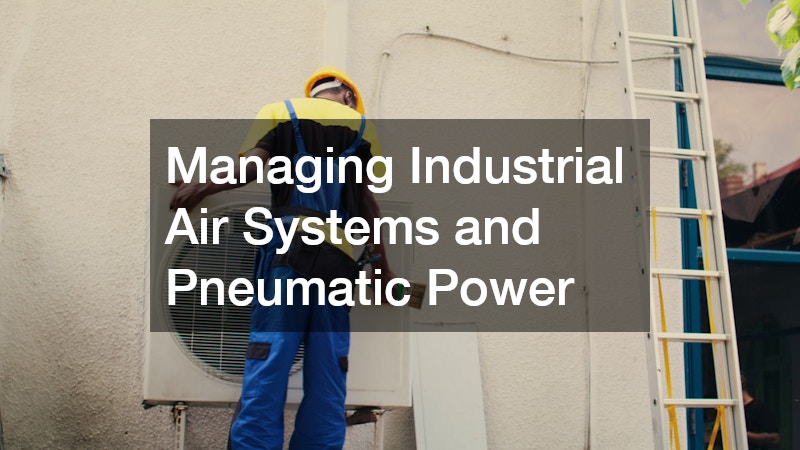
In many commercial and manufacturing environments, managing the air goes far beyond ensuring the administrative offices are kept at a pleasant seventy degrees. Air itself becomes a critical utility, utilized as a powerful physical force to drive heavy machinery, and requiring intense filtration to protect workers from industrial byproducts. Understanding the physics of compressed air and the stringent requirements of high-level industrial filtration is absolutely essential for facility directors operating in the manufacturing, medical, or heavy logistics sectors.
Size Pneumatic Delivery Lines Correctly for Manufacturing
Compressed air is the lifeblood of modern manufacturing. It powers robotic assembly arms, drives heavy-duty pneumatic impact tools, and operates the complex automated valves that control material flow. However, generating compressed air is incredibly energy-intensive, making it one of the most expensive utilities in a facility.
-
Calculate precise CFM demands: Before installing piping, you must calculate the total Cubic Feet per Minute (CFM) required by every pneumatic tool and machine operating simultaneously at peak production. Undersizing the main compressor will result in massive pressure drops at the end of the line, causing expensive machinery to stutter, fail, or produce defective products.
-
Utilize rigid, smooth-bore piping: The distribution piping must be engineered for maximum aerodynamic flow. Never use standard PVC piping for compressed air; PVC becomes brittle over time and can shatter like shrapnel under high pressure, creating a lethal hazard on the factory floor. Instead, utilize rigid, smooth-bore aluminum piping. Aluminum does not corrode, and its smooth interior walls drastically reduce friction, ensuring the air pressure generated in the compressor room is delivered completely intact to the factory floor.
-
Manage moisture in the lines: Compressing air naturally squeezes the water vapor out of it, creating gallons of liquid water inside the pneumatic lines. Professional air compressor installation requires integrating heavy-duty refrigerated air dryers and point-of-use desiccant filters to strip this moisture out of the system before it reaches your pneumatic tools, where it would cause devastating internal rust and mechanical failure.
Upgrade Filtration Standards for High-Occupancy Zones
In the wake of global health concerns, the standards for commercial indoor air quality (IAQ) have been permanently elevated. Employees and customers now expect, and regulatory bodies demand, that the air they breathe inside a commercial facility is actively scrubbed of pathogens, volatile organic compounds (VOCs), and hazardous particulate matter.
-
Elevate your MERV ratings: The standard spun-glass filters (often rated MERV 8 or lower) used in the past are only designed to stop large dust particles from clogging the equipment; they do nothing to protect human lungs. Upgrade your facility’s air filtration to MERV 13 or higher, which can trap microscopic bacteria, sneeze droplets, and fine industrial dust. Ensure your blower motors are powerful enough to handle the increased air resistance these thicker filters create.
-
Integrate active purification technologies: Do not rely on passive filters alone. Install advanced purification systems directly inside the main air handlers. Bipolar ionization technology releases charged ions into the ductwork that attach to viruses and mold spores, neutralizing them mid-air. Alternatively, high-intensity UV-C light arrays installed shining directly on the evaporator coils will instantly destroy any biological growth attempting to take root in the dampest part of the system.
-
Partner with IAQ specialists: Upgrading these systems is complex. While many general HVAC companies focus solely on manipulating temperature, finding a partner that specializes deeply in comprehensive indoor air quality testing and advanced filtration engineering is crucial. This specialized knowledge is required for passing modern health and safety audits, maintaining cleanroom certifications, and proving to your workforce that their physical health is fiercely protected.
Establishing Ironclad Vendor Partnerships
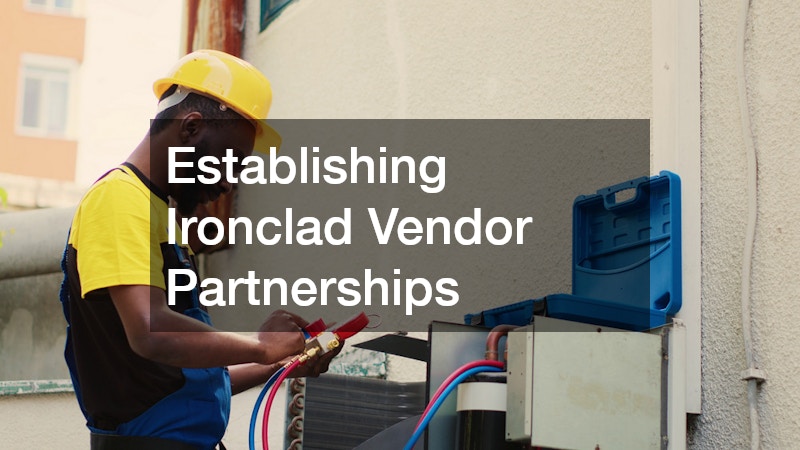
The most sophisticated climate and air systems in the world will eventually fail if they are not maintained by highly skilled, deeply knowledgeable technicians. Facility managers cannot be expected to hold the technical certifications required to handle high-voltage electrical grids, toxic refrigerants, and complex thermodynamic calculations. Therefore, the success of your building’s operations relies entirely on the quality of the external vendors you hire. Building a strong, legally sound, and highly communicative partnership with a commercial service provider is the final, crucial step in mastering your facility’s climate infrastructure.
Demand Comprehensive Service Level Agreements (SLAs)
The days of calling a local contractor only when smoke is pouring out of a vent are over. Commercial real estate management requires predictability in both performance and budget. This predictability is achieved through rigorous, heavily documented contracts.
-
Move beyond the handshake: Never settle for a verbal agreement or a basic “time and materials” contract for ongoing maintenance. Draft a strict Service Level Agreement (SLA) that leaves absolutely nothing to interpretation.
-
Define the exact scope of preventative work: The SLA must clearly outline the exact frequency of preventative maintenance visits (e.g., monthly filter changes, quarterly belt replacements, annual coil cleanings). It must include a granular checklist of every specific component that will be inspected, lubricated, and calibrated during those visits.
-
Demand transparent reporting and forecasting: A truly reputable commercial HVAC company will not just fix things and leave a bill; they will act as a strategic partner. They will transparently provide detailed digital service logs with photographic evidence of their work. Furthermore, they will use this data to actively help you build a multi-year capital replacement forecast, allowing you to budget accurately for the eventual replacement of aging rooftop units long before they catastrophically fail.
Verify Guaranteed Emergency Response Times
In the commercial sector, time is literally money. If a critical climate system goes down, every hour you wait for a technician to arrive translates to lost inventory, halted production lines, or thousands of dollars in refunded hotel or retail experiences.
-
Establish hard contractual deadlines: Ensure your vendor contract includes a guaranteed maximum response time for critical failures. This matrix should be clearly defined based on the severity of the issue—for example, mandating a strict two-hour on-site arrival time for a total loss of server room cooling, or a four-hour response time for a total facility heating loss during winter months.
-
Enforce financial penalties for delays: An SLA is useless if it lacks teeth. Include clauses that stipulate financial penalties or discounted service rates if the vendor fails to meet these guaranteed emergency response benchmarks.
-
Secure your priority status: Thoroughly vetting and signing an annual contract with heavy-duty commercial heating contractors during the calm summer months ensures that your facility is already logged into their system as a top-tier, priority client. When a massive polar vortex hits your region and every local technician is immediately overwhelmed with hundreds of desperate emergency calls from un-contracted businesses, your SLA guarantees that their best technicians are dispatched to your facility first.
In conclusion, managing a commercial climate and air system requires a profound shift in perspective. These massive networks of ductwork, compressors, boilers, and pneumatic lines cannot be treated as background utilities to be ignored until they break. They are dynamic, highly complex assets that require daily respect, rigorous engineering, and highly proactive management.
Every single dollar you invest in precise load calculations, thermal envelope sealing, advanced preventative maintenance, and high-efficiency filtration pays immediate and compounding dividends. These investments drastically lower your monthly utility overhead, extend the lifespan of million-dollar capital equipment by decades, and completely eliminate the chaotic, expensive disruptions caused by emergency breakdowns. Most importantly, optimizing your climate systems guarantees a safe, pristine, and highly productive environment for the people who make your business thrive.
Take control of your facility’s atmosphere today. Pull your current maintenance logs, identify the oldest and most vulnerable units on your roof, and schedule a comprehensive, specialized thermal audit before the next season of extreme weather arrives. By implementing the strict, proactive protocols detailed in this guide, you will permanently secure the operational integrity of your commercial property.